
How to Clean a Concrete Retaining Wall
Poured walls and block walls in a yard turn dark and blotchy over the years. What wall and masonry cleaner makers say about cleaning them, with photos from one of our jobs.
The short answer
A retaining wall cleans with water, a masonry cleaner where it is needed, a brush on heavy spots and a full rinse from the bottom up. Cleaner makers say to test first, keep cleaner application at low pressure, and never use muriatic acid on block. White powder on a wall is efflorescence and needs the wall to dry fully after washing.
Why walls go dark
A retaining wall holds back soil, so one side of it is always against damp ground. Water moves through the concrete, splash from rain and sprinklers hits the face, and plants on top drop leaves and dirt down the front. Over a few years a light gray wall turns blotchy and dark, often with a white crust near the bottom.
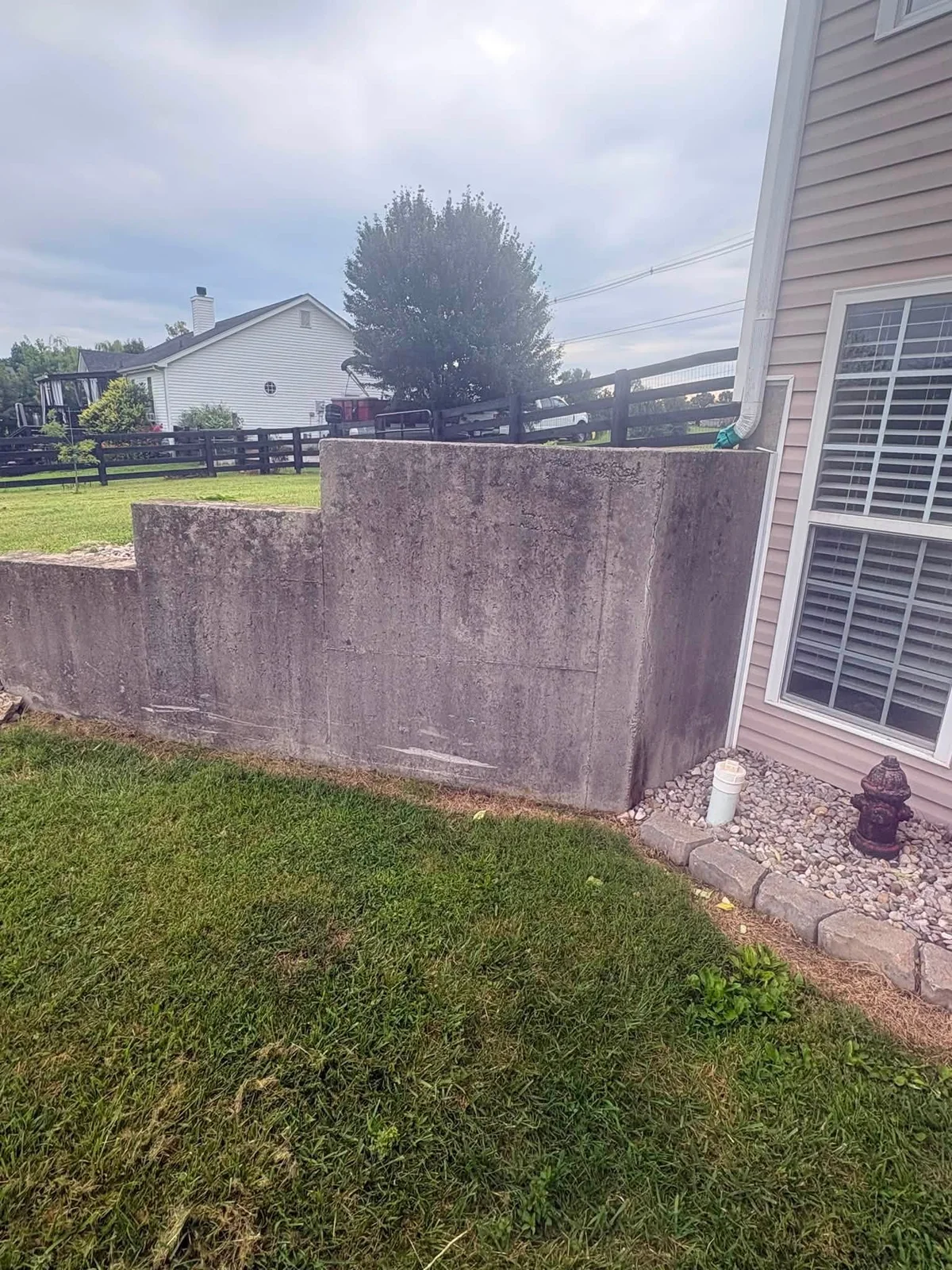
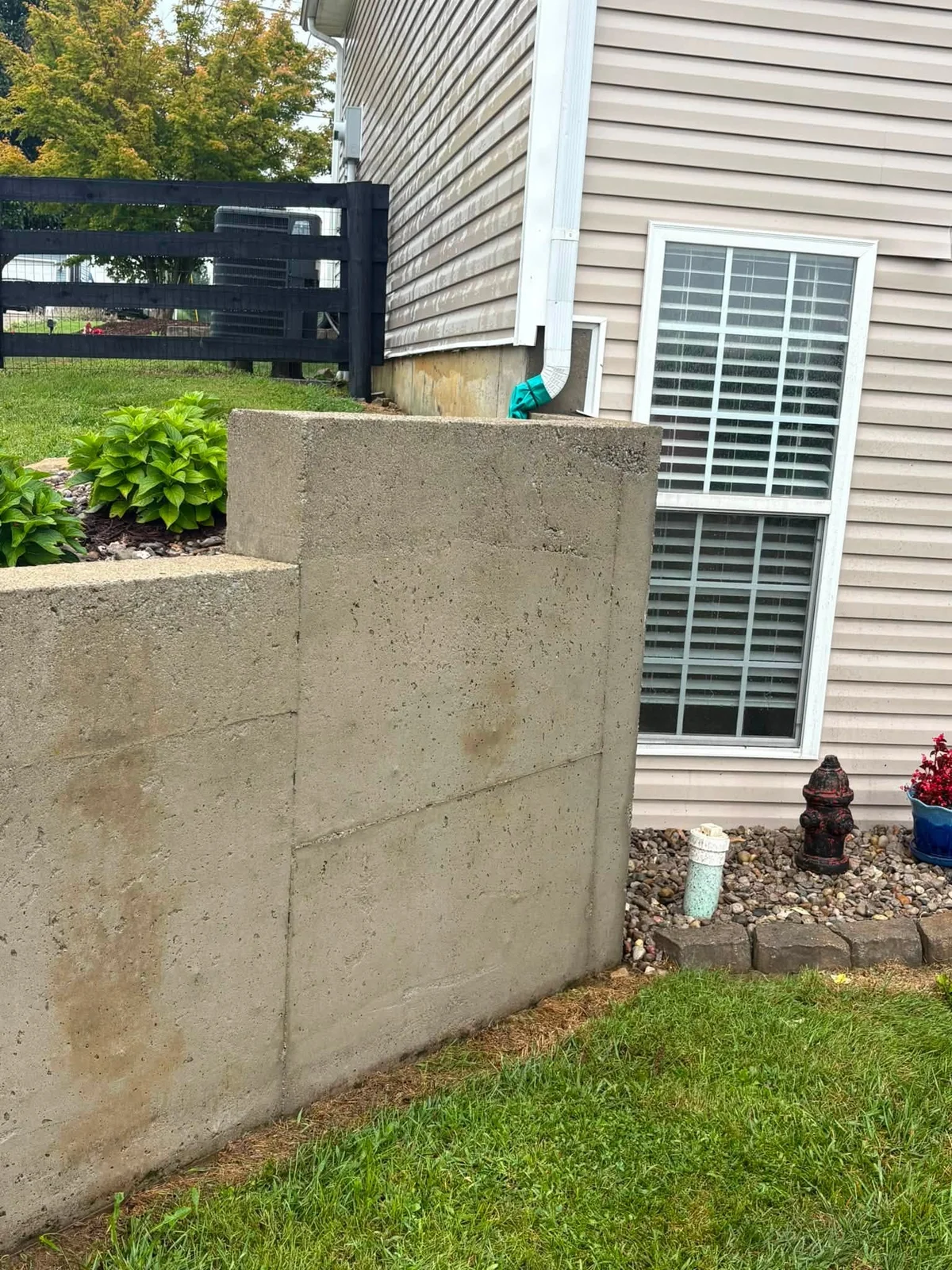
Stepped concrete walls from one of our jobs, before and after.
What the makers say
Allan Block, a retaining wall block maker, lays out the steps in its care guide: wet the wall with a hose or pressure washer to loosen the grime, apply a cleaner, scrub with a stiff brush, rinse so you “don’t want to leave lasting streaks,” and let it dry, which “may take a few hours up to a day” in shade (Allan Block).
Prosoco, which makes masonry cleaners, adds three warnings on its block cleaner sheet (Prosoco):
- “Do not clean block with muriatic acid.”
- Do not spray the cleaner itself above 50 psi, because it “drives the cleaner into the surface, making rinse difficult,” and can stain.
- “ALWAYS TEST before overall application,” and rinse from the bottom up.
It also says to protect plants, painted surfaces and metal nearby from splash and runoff, which matters on a wall with a flower bed on top of it.
The white crust
The white powder near the bottom of a wall is efflorescence, salt carried out by water moving through the concrete. Allan Block says to dry the surface completely after washing, because “if moisture remains the efflorescence is likely to return” (Allan Block). More on it here: white powder on brick and pavers.
One visit for the whole yard
Walls rarely get dirty alone. The patio below them and the walk beside them usually need it too. See driveway and concrete cleaning and patio cleaning.
What cleaning will not fix
Cleaning will not fix a wall that is leaning, cracked or bulging, and it will not stop water that seeps through the wall from the soil behind it. If water keeps coming through, white powder and dark patches come back. A wall in deep shade takes longer to dry and regrows faster.
Want it looked at?
Free estimate, a same day response, and the price before we start.